- Stubbuilder
- Aug 6, 2026
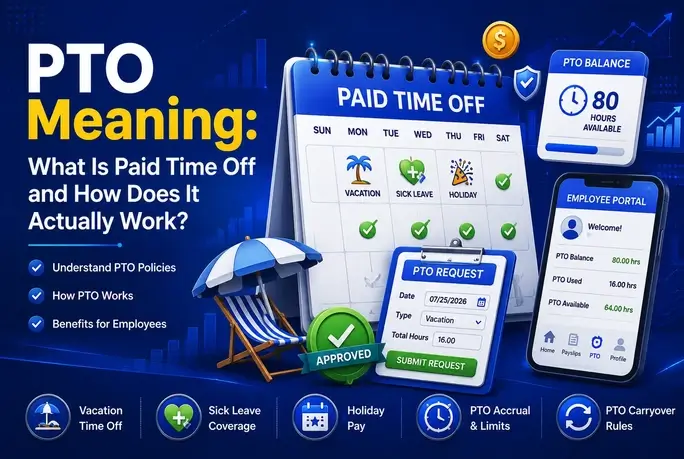
What Is Paid Time Off and How Does It Actually Work?
Click on a job offer, see “15 days PTO,” and think to yourself, wait, exactly, what is PTO? PTO is thrown around a lot in job postings, human resources handbooks, and offer letters at companies everywhere, but almost nobody explains what it really means in normal people’s words. So let’s fix that.
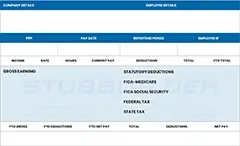
Most pay stubs show how much PTO you have left when they list your earnings side by side, so it’s up to date and accurate. A pay stub generator is ideal for creating stubs that reflect your real hours/balances if your employer’s stubs aren’t so clear or you’re self-employed and need proof of pay and PTO history.
What Is PTO?
PTO stands for Paid Time Off. And that’s what PTO really is: an assortment of hours or days that your employer officially pays you for without actually working.
PTO means that sick days, vacation, a personal day to flexible time off, or even a mental health day- in many companies, all of this is combined into one bucket called PTO instead of the old way where you had it divided into different categories.
When someone asks you exactly what is paid time off? Or what is PTO at work?- The brief reply would be: It’s compensated leave you have gained with very little as to formal skill, and you may put it to use; however, it will depend on the company PTO policy.
A lot of people get confused, but remember PTO is not “OT” or overtime, and the “upto”, which in fact means just someone that typed “up to” as a word, not anything related to time off. If you reached here looking for “what is up to,” well, that’s a different word — just meaning as much as or not exceeding.
PTO vs. Vacation: What’s the Real Difference?
This is one of the most asked PTO questions out there, and to be honest, many people don’t know the difference between PTO and vacation; it makes sense when this confusion works.
- You get vacation days; literally to go on vacations, take trips, chill out, and get away.
- PTO is broader. It can include vacation but will also include sick time, doctor’s appointments, random Tuesday you just need off, and, in some, even the death of a family member.
Older-style companies often put these into separate buckets: X vacation days, Y sick days, Z personal days. More recent offerings, especially at tech and startups, simply combine everything into one PTO bank. That means fewer categories to keep tabs on and more flexibility for the employee, in a nutshell.
This PTO policy varies company to company, so always worth checking your own.
How Does PTO Accrual Work?
Accrue PTO meaning – “Accrue PTO” basically means you earn it over time, instead of getting the whole yearly amount dumped on you on January 1st.
Imagine this: if your company gives you 15 PTO days in a year and pays biweekly (26 pay periods), then you are earning approximately 0.577 days of PTO each paycheck. Fast forward an entire year, and you end up with all 15 days accrued by that time (provided, of course, you never took any in the meantime).
A few common accrual setups:
- Accrual-based – you accrue a small amount of PTO each pay period (standard).
- Front-loaded – all your yearly PTO is given in one go at the beginning of each year.
- Unlimited/flexible PTO – there is no maximum number of days; you take whatever time you need, however long your manager thinks the work can get done.
Does Part-Time Get PTO Too?
It depends, but yes, prorated. In a typical case, if a full-time employee generates 15 days a year, presumably part-time employees would accrue around 7.5 days to have worked about half the hours according to how your employer splits it up.
However, under Federal Law in the U.S., PTO for part-timers is not mandated; it varies depending on individual employer policy, meaning it can be anywhere from generous to non-existent based on your workplace.
How Much PTO Is “Normal” in the US?
There’s no federally required minimum PTO (paid time off) by law. So “normal” is really whatever it is that employers normally offer.
Generally speaking, across the U.S. workforce:
- New employees often start with PTO around 10–15 days a year.
- PTO tends to be frontload or increases with tenure; many companies tack on additional days after things like 2, 5, and 10 years of service.
- Government and unionized jobs tend to offer more generous, structured PTO than smaller private companies.
- Some public holidays are count separately, and they aren’t part of your pto personal time off at all.
How Do You Actually Use PTO?
PTO without complexities, so here’s a typical flow at most companies:
- Check your balance – Most HRMS systems (like Workday, BambooHR, or Gusto) are update in real time about the amount of PTO available to you.
- Request time off – Use that system to request time off ahead of time, or talk directly to your manager if a smaller company.
- Approval – You have to get the green signal from your manager, particularly if multiple people are looking at the same dates.
PTO time is automatically deducted from the PTO bank after it is approved.
These notes to keep in mind:
- Some states require all unused PTO to be paid out when you leave your job (California is a huge one here); others do not.
- Unused PTO is often lost at year-end, instead of rolling over, due to “use it or lose it” policies in some states and by certain companies. Others allow a small amount to carry forward into the following years.
- Verifying pay stubs is actually one of the simplest approaches to track your PTO balance without sifting through an HR portal, because many payroll stubs indicate accrued and used PTO hours right alongside the rest of your salary.
Building a Simple PTO Policy (For Employers)
If you’re on the employer side of things reading this, a basic PTO policy definition should include.
- The amount of PTO that employees receive, and how quickly they build it up
- If they are poole together as a bank or allocated into vacation/sick/personal
- Rollover rules- can employees carry days over to the next year
- POV on payout rules when an employee leaves the company
- The advance notice required for PTO submission
- Any blackout periods – such as busy times when time off is restricte
HR practitioners need to address this by writing things down, yet simply; in a way that minimizes confusion amongst themselves and employees alike.
Final Note
PTO is one of those things that seems way more advanced than it really is, at the end of the day. For the most part, it’s simply compensate time away from work; how much you receive, whether or not you track it, and how you utilize it all depend on your employer’s PTO policy.
If you ever have any questions about it, your pay stub template or HR portal is typically the quickest spot to see in black and white your actual PTO balance.
FAQ’s
1) What is a PTO day?
One day of paid leave taken from your PTO balance, and you get paid your normal wage even though you’re not working that day.
2) What does PTO stand for?
PTO stands for Paid Time Off.
3) Is PTO the same as sick leave?
Sometimes. Some companies combine sick leave into PTO; others keep it as a separate bucket. Check your specific policy.
4) Can I get paid out for unused PTO?
Depends on your state and company policy. Some states legally require it; others leave it up to the employer.
5) Does PTO roll over every year?
Some companies allow full or partial rollover; others follow a “use it or lose it” rule. It varies a lot.
Also Read:
Top 17 Proof of Income For Apartment Documents Landlords Accept
What Does Arrears Mean? Definitive Guide
What Makes a Pay Stub Look Real? A Guide to Legitimate Paycheck Stubs