- Stubbuilder
- Jun 3, 2026
Top 17 Proof of Income For Apartment Documents Landlords Accept
Identifying the right tenant goes beyond first impressions; landlords need reliable proof that the rent will be paid every time. That’s where proof of income documents come up. In recent times, more people will be working as freelancers or remotely, and verifying earnings will become more vital and more complex than ever. Are you looking for quick approval for your next apartment? Create compliant income documents using a secure paycheck stubs generator.
In this guide, we will be breaking down the top 17 proof of income for apartments that landlords accept.
What is proof of income for an apartment?
Proof of income for an apartment is a document that shows a landlord that you earn enough money to pay your rent.
Most landlords require at least three times the rent, providing a safety net and reducing the risk of missed payments.
Proof of income can come in various forms, each providing a different view of the tenant’s financial stability. Understanding proof of income is important as it helps you in assessing the stability of tenants and reduces the risk of non-payment.
What are the requirements to rent an apartment?
To rent an apartment, landlords usually want to make sure you can comfortably pay rent and are a responsible tenant. They will typically ask for proof of income, such as recent pay stubs, bank statements, or an employment letter, and many expect your monthly income to be at least two to three times the rent. You’ll also need to provide a valid ID and fill out a rental application that includes your personal details, job information, and rental history. In many cases, landlords run a credit check to review your financial behavior and may contact previous landlords or references to confirm your reliability.
Along with documents, there are upfront financial requirements before moving in. Most landlords require a security deposit, usually equal to one month’s rent, along with the first month’s rent in advance and sometimes even the last month’s rent. If your income or credit history is limited, you might be asked to provide a guarantor or co-signer who agrees to take responsibility if you fail to pay. Depending on the property, there could also be additional conditions, such as a background check or renter’s insurance.
Why do landlords ask for proof of income?
Landlords ask for proof of income for renting to ensure you can reliably pay rent and are a low-risk tenant. Below, we have mentioned the common scenarios:
1) Confirm that you can afford the rent
Most landlords follow the 2.5x-3x rent rule, meaning your earnings should be at least 2.5 to 3 times the rent amount.
2) Reduce risk of missed payments
Rent is the landlord’s main source of income. Verifying your income helps in:
- Avoiding tenants who struggle financially
- Minimize the chance of delayed rents
3) To verify employment and income stability
A proof of income shows where you work, how consistently you earn, and whether your source of income is stable or not.
4) To prevent false claims
Some applicants might try to exaggerate their income. Documents such as bank statements help landlords in:
- Verifying authenticity
- Cross-checking details
Top 17 proof of income documents landlords accept
Learning about proof of income documents that landlords accept is a successful step towards property management. Below, we have mentioned the documents:
1) Pay Stubs
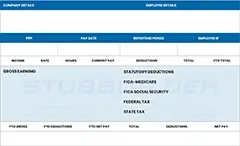
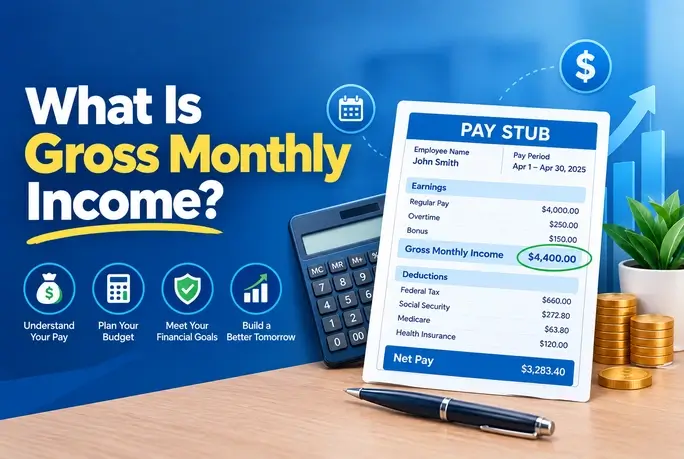
Pay stubs are the most common proof of income. It shows that the applicant has a stable income. You are required to have at least two to three recent pay stubs to get an idea of how often the application is paid and any fluctuations in pay. Search for details like renter’s details, employer information, pay period, gross pay, and net pay on the application.
2) Bank Statement
People whose employment is not typical, for example, people who work for themselves, won’t get normal pay stubs, so giving their bank statements of the last two to three months is an excellent way to demonstrate proof of income. In case the person who is applying for the property is getting paid only through the commission, don’t forget to ask for the bank statements for a few months to see if their income is stable enough to meet your income requirements.
3) W-2 Income Statement
The W-2 form is a type of document issued by the government that is vital for determining a person’s income against their tax returns. It often serves as the main source of income disclosure that employers give out to their employees. As a rule, the document includes data about income earned and the amount of tax deduction.
At the same time, since the W-2 report will only reflect the earnings of the past year at most, it is not capable of reflecting any changes happening in between, such as a promotion or a raise.
4) Tax Returns
The IRS 1040 provides a very complete and detailed picture of the applicant’s earnings. Besides showing pay from jobs, it also discloses various forms of income, including unearned income, such as social security benefits or pensions. Similar to W-2s, these could potentially not be the showcase of the applicant’s present income, thereby demanding a closer scrutiny.
5) Formal Letter from Employer
A letter from their employer that formally states the renter’s employment status can be an excellent way for you to verify the renter being employed. This will be quite handy if the renter has just landed a job and is not yet in possession of pay stubs. When asking the renter to provide the document, you may also request the employer to mention the salary and the job title in the letter.
6) Social Security Benefits Verification Letter
A social security benefit verification letter is a document that can be used by retirees who are tenants in a rented property. It serves as proof to the landlord that the applicant’s main income comes from the government.
The benefit verification letter also states whether the applicant is a recipient of benefits or not, and if so, it lists the amount, any deductions, and the payment schedule. This document should not be mixed up with the Social Security Statement since the latter is mostly for one’s retirement plan and does not contain information on the actual payments or whether the individual is receiving the benefits at the moment.
7) 1099 Form
IRS Form 1099 is used to report a wide range of non-employee compensation, such as self-employed, freelancers, or gig workers. There are several variants of 1099 forms. The most useful forms for income verification purposes include 1099-NEC, 1099-MISC, and 1099-K.
In case the person has had various sources of non-employee income, they will have different 1099 forms throughout the year. Asking for the last year or two’s forms will help to check the person’s current payment capability and past income.
8) Annuity Statement
An annuity is a type of financial product where a person receives fixed, periodic payments for a specific time frame. Usually, these payments are derived from an insurance policy, a will, or some other long-term financial contract.
Since the income from annuities might be limited, one should ascertain if the annuity has a maturity or expiration date. This will inform one of the durations for which the recipient will be getting those payments.
9) Pension Distribution Statement
A pension distribution statement is a retiree’s income reported to the IRS. It reports the money that retirees got from pensions, 401(k)s, IRAs, or other retirement accounts.
10) Worker’s Compensation Letter
Someone who rents might show their workers’ comp award letter to a landlord if they get injured in a work accident and are compensated for it. It must be a formal document given to them by the insurance company, the state agency, or the court that explains the work injury claim, the payment amount, the type of payment, the frequency, and the benefit dates. With these benefits, there is usually an end to them, so be sure to check the dates.
11) Court-Ordered Letter
A piece of paper stamped by a judge might say someone owes cash – settlements, spousal payments, kid support, whatever the ruling was. That document? It means the decision stands, nothing more. Money moving hands isn’t proven there. Look elsewhere for proof funds changed, pockets, bank slips, or payout logs.
12) Interest and Dividend Income
Another non-conventional source of income would be through investment. This source can demonstrate a consistent income to support or even replace the usual earnings in cases of applicants who are retired, self-employed, or primarily getting their income from interest or investments.
In order to verify, ask for a 1099-INT or 1099-DIV form. A 1099-INT details the amount of interest a tenant has earned during the tax year; on the other hand, a 1099-DIV lists the dividends and distributions from stocks or mutual funds.
13) Severance Agreement
In the event that a tenant is laid off, they might receive a severance agreement. It is a long document with lots of information. However, the employment dates and severance pay sections are the ones that you would be interested in.
Severance pay is most often a single payment, i.e., the tenant may be able to pay for rent for a short time only and may not have a source of income thereafter.
14) Proof of Incentive Payments
Renters whose jobs are based on commissions can show evidence of their bonus or incentive payments. This evidence can be presented in various ways, such as the common ones like pay slips, letters from the employer, contracts, 1099-NEC forms, or bank statements.
People who rent on a commission-only basis may have a consistent income source, but it might not be very clear if this income is dependable enough to satisfy your income standards.
15) Unemployment Benefit Letter
An unemployment benefit letter is an official document issued by a government agency that confirms you are receiving unemployment benefits. It typically includes details such as your approved weekly or monthly benefit amount, the duration of payments, and your eligibility status. For tenants who are between jobs, this letter serves as valid proof that you still have a steady source of income to cover rent, even if it is temporary.
Landlords may accept an unemployment benefit letter as proof of income, especially when combined with other documents like bank statements or previous pay stubs.
16) Disability Benefits Statement
A Disability Benefits Statement is a valid proof of income document for apartment applications, especially for individuals who receive government or private disability support. This statement outlines the amount of benefits you receive, payment frequency, and the issuing authority. Since these payments are typically consistent and backed by official programs, landlords often consider them a reliable source of income.
For tenants, submitting a disability benefits statement helps demonstrate financial stability even without traditional employment.
17) Business Bank Statements
Business bank statements are a widely accepted proof of income for apartment applications, especially for self-employed individuals, freelancers, and business owners. These statements provide a clear record of your company’s cash flow, deposits, and overall financial activity, helping landlords assess how much income your business generates. Regular incoming payments and a healthy balance can signal that your income is stable and sufficient to cover monthly rent.
How do apartments verify income?
Apartments verify income mainly to confirm that you can consistently afford the rent. The most common method is reviewing recent pay stubs, which show your earnings and employment stability. Landlords may also contact your employer directly or ask for an employment letter to verify your job position and salary. In some cases, they check bank statements to see regular deposits or use third-party verification systems that pull employment data automatically.
If you’re self-employed or don’t have traditional pay stubs, landlords usually ask for tax returns, W-2s, or 1099 forms to assess your annual income. They compare your earnings against a standard requirement, typically expecting your monthly income to be about two and a half to three times the rent. If you don’t meet this threshold, you can still qualify by providing a co-signer, showing strong savings, or agreeing to additional terms like a higher deposit or paying some rent in advance.
How does StubBuilder help tenants in generating proof of income?
StubBuilder helps tenants generate proof of income by allowing them to quickly create professional pay stubs that clearly show their earnings, taxes, and deductions in a structured format. A pay stub is one of the most commonly accepted income documents by landlords because it provides a detailed breakdown of income for a specific pay period, making it easier to assess financial stability.
For tenants who are freelancers, self-employed, or don’t receive traditional pay stubs, StubBuilder becomes especially useful. It saves time, reduces manual errors, and helps maintain proper financial records, ensuring that the generated document looks professional and easy to verify. By using a paycheck stub maker tenants can create income proof on demand, which can improve their chances of getting approved by landlords as long as the information provided is accurate and truthful.
Key takeaways
Securing a rental becomes much easier when you understand what counts as valid proof of income for apartment applications. From traditional documents like pay stubs and tax returns to alternative options such as bank statements, freelance contracts, or benefit letters, landlords today accept a wide range of income verification methods. The key is to provide clear, consistent, and verifiable records that demonstrate your ability to pay rent on time. If you’re missing standard documents, you can easily create professional income records using a reliable paystub generator, ensuring your application looks complete and credible.
FAQs
1) How much proof of income for apartment?
Most landlords require your monthly income to be at least 2.5 to 3 times the rent, supported by documents like pay stubs, bank statements, or tax returns. If your applicant owns their own business, you can ask for invoices or for their business bank statements.
2) What is proof of income for renting?
Proof of income for renting is a document or record that shows you earn enough money to pay rent consistently, such as pay stubs, bank statements, or tax returns.
3) How many pay stubs do I need for an apartment?
Landlords require 1-3 months of your recent pay stubs as proof of income for rental applications.
4) Do I need proof of income to renew apartment lease?
Not always, many landlords don’t require it for renewals, but they may ask for updated proof of income if your financial situation or lease terms have changed.
5) What should a proof of income letter include?
Proof of income should cover job title, employment status, length of employment, their usual salary, and the basis on which they receive payment.
6) What documents must a landlord give to a tenant?
The landlord must provide a tenant with: a gas safety certificate, a current energy performance certificate, and a current electrical installation condition report.
7) What proof do you need to rent?
You need to show a proof of employment in order to rent.
8) How much notice do landlords need to give to end tenancy?
Landlords need to give 90 days’ written notice to end tenancy.
9) Should a tenant have a copy of the tenancy agreement?
A tenancy agreement should be signed by all tenants and the landlord. If there are joint tenants, each should receive a copy of the signed agreement.
10) Which is not an acceptable proof of income?
A personal letter without official verification is not acceptable to landlords.