- Stubbuilder
- Sep 3, 2026
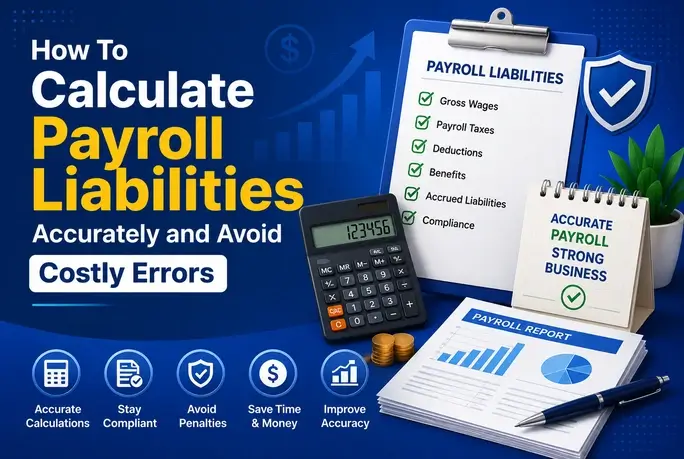
How To Calculate Payroll Liabilities Accurately and Avoid Costly Errors
If you have ever checked your books after a payroll process and questioned why the amount held in liabilities isn’t equal to what you had expected, you’re not the only one. Payroll seems simple, at first glance: the process of paying people and moving. But behind the scenes, there’s a list of amounts that you owe but haven’t left your bank.
If you make a mistake with that payroll liabilities number, you’ll have more issues than just an erroneous spreadsheet. You may have to face IRS penalties, angry workers, and a bookkeeper who doesn’t anticipate the end of the month.
This article will help you understand what the payroll liabilities are, what kinds of them you may come upon, how to calculate them, and what mistakes you may generally make.
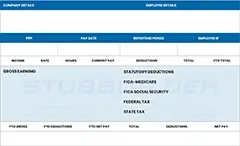
Note: You can make the paystub by using a free paystub generator, as it helps you understand the payroll liabilities easily.
What Are Payroll Liabilities?
Payroll liabilities are based on the sums of money that a company owes to its employees as a result of the payroll process. Payroll liabilities include wages that employees are entitled to but have not yet received. They also include the taxes that have been withheld from the paychecks of employees and the company’s funds that are reserved for benefits, garnishments, and other similar obligations.
The best way to appreciate what a payroll liability is: as soon as an employee comes to work, the employer has a liability that would be eliminated on payday.
Payroll Liabilities vs. Payroll Expenses
This is where much of the confusion begins, and it’s important to clarify the terms involved.
- In accounting terminology, payroll expense is an expense that has already been incurred. So, payroll expense appears on the income statement as an expense associated with running your team for a specific time period.
- Payroll liability, on the other hand, refers to an obligation that is still outstanding. This means that it will be recorded on the balance sheet until it is paid off.
So, is salaries expense a liability? Simply put, it is not. Salaries expense simply measures the amount paid for labor. However, sometimes you might not have paid workers. In this case, you will have to account for unpaid wages, which is called wages payable.
In other words, expenses indicate the cost of the services received, whereas liabilities show the amount that is still outstanding since the services were provided. One payroll run will usually generate both expenses and liabilities, with the former denoting the cost of services provided and the latter indicating the amount still due.
How to Calculate Payroll Liabilities: Step-by-Step
Here is how the process that payroll teams will carry out actually looks:
Step 1: The first step is to calculate the gross salary of employees. For workers who receive fixed salaries, the annual salary should be divided by the number of payment periods and calculated. For hourly employees, calculate the number of hours worked multiplied by the hourly rate. Be careful to include the overtime hours worked, bonuses received, or differential pay.
Step 2: Next is deducting employment taxes and paycheck deductions as per the employee’s W-4 form. Get the federal income tax, which the employee stated on his W-4. Then work out what state (if any) the employee lives in. Make sure you include the FICA tax rate, which is 6.2% for Social Security and 1.45% for Medicare health insurance, and any pre- or post-tax deductions that are required.
Step 3: The third step is to calculate the employer’s tax obligations. The enterprise pays the same amount of Social Security and Medicare tax that was withheld from employees. You also usually have to include federal and local unemployment tax, which usually applies to the first $7000 from all employees of the business.
Step 4: The fourth step is to tally everything on your payroll liability accounts. Totals will include wages payable, tax withholdings, employer tax liabilities, and benefit deductions. This amount is the true amount owed to everyone: the employees, the IRS, state authorities, and benefit providers, as of the pay date.
Step 5: Double-check before making any payments. You should compare the total calculations with the prior period and the payroll software calculations before any money is sent. A quick check helps avoid miscalculations and misreported figures in the future.
Step 6: Clear the liability after the payment is done. Once wages are paid out and taxes are deposited, you can remove the figures from the liability account. The remaining amount that has not been paid breaks down into payroll liabilities for the next cycle.
Common Errors Of Payroll Liabilities and How To Avoid Them
There are a few errors that keep coming back.
- One of the major mistakes is the incorrect classification of employees. Misclassifying employees and treating them as independent contractors is among the simplest ways to incur tax penalties and create tax liability. The classification depends on the nature of the work relationship, and not on the requirement of the moment.
- The second mistake is missing the tax deposit deadline. Federal and state tax deposits exist on their own schedule that is independent of your payroll schedule. Missing a tax deposit, even for 24 hours, can create interest penalties.
- Another problem is mixing of funds between payroll and operating accounts. The creation of a separate payroll account complicates the use of withheld taxes for other purposes.
- The final common mistake is failing to carry out reconciliation. Comparing payroll ledgers and bank statements regularly is the best way to spot any withholding error at an early stage.
Best Practices Worth Building Into Your Process
- Employ payroll using a process that is done electronically. It is easy to make mistakes when calculations are performed manually.
- Having a separate account for payroll will ensure that money is never combined with the money for business operations.
- Always reconcile payroll liabilities with the bank and general ledger. Set reminders for deposit deadlines to avoid any failures.
- Each time there is a change in taxation rules, rates of unemployment, or contribution levels, make adjustments accordingly to your payroll set-up.
Keeping the Paper Trail Clean
Tracking payroll liabilities accurately isn’t simply a matter of bookkeeping; it is essential for making sure your business avoids penalties and that your employees are paid on time and correctly. If your payroll process includes generating pay stubs for contractors or employees, it is easy to see why it is wise to keep well-organized records of gross pay, deductions, and withholdings for every pay stub so that when taxes are due, you won’t have to worry about your payroll liabilities.
StubBuilder is a tool designed precisely for generating the documents that make payroll easy and accurate every pay period.
FAQs:-
1) What are payroll liabilities?
Funding that a company has to pay — to workers, revenue taxes, or benefit suppliers — which is yet to be paid.
2) Is salaries expense a liability?
No. The cost of wages is an expense reflected in the income statement. The unpaid amount of the wages is recorded as a liability on the balance sheet.
3) Is wages payable a current liability?
Yes, almost always, because wages are usually paid in a few days or weeks.
4) Where do payroll liabilities show up on the balance sheet?
Under current liabilities, separately listed as its own line item instead of being combined with accounts payable.
Also Read:
How to Prove Income If You Get Paid in Cash
How to Prove Income for a Mortgage